Papa John's · 2020
Contactless Ordering
Shipping curbside pickup and post-delivery tipping under pandemic constraints
The gist
In 2020, contactless everything arrived in weeks rather than quarters. No-Contact Delivery shipped fast and worked: drivers could complete a delivery without an exchange at the door. It also removed the moment that tipping had always happened in, and driver earnings fell at exactly the point drivers were working hardest. Curbside pickup demand rose at the same time, into a category that was implementing it badly. None of it was optional, and speed was the whole environment; there was no version of this that shipped on a normal timeline.
Reframed a drop in tips from an interface gap into a question about when tipping now happens, moved it after delivery, and gave drivers standing in the design as a stakeholder rather than a downstream effect. Then built curbside against a catalog of how competitors had failed, designed across the whole handoff instead of the screen, and negotiated it into store operations.
Sr. UX Designer
Ordering, delivery and pickup experience
Papa John's · 2020
What had to change
One interaction was carrying two things. Here’s what it took to get the second one back.
Contactless kept the handoff and quietly dropped the other thing that used to ride along with it.
Treat the side effect as the actual problem
No-Contact Delivery shipped quickly and did exactly what it was built to do. Then driver tips fell. The doorstep exchange had been the moment tipping happened, and removing the contact removed the moment, a consequence nobody had modeled, because the feature had been reviewed for customer and store safety and no one had asked what it did to driver earnings.
Reframe it from a missing button to a missing moment. The question was not “where do we put tipping in the app,” it was “when does tipping now happen, and what has to exist at that point.” That put the answer after delivery rather than at checkout.
Saying out loud, days after a well-received launch, that the launch had created a problem. In a crisis everyone is being asked to move; volunteering that your own shipped work needs follow-on work is not the popular contribution.
Design for the person who isn’t holding the phone
Drivers were working more than they ever had, earning less per run, and were not users of the ordering app. Nobody’s roadmap owned their income. Every metric the team reported on measured the customer.
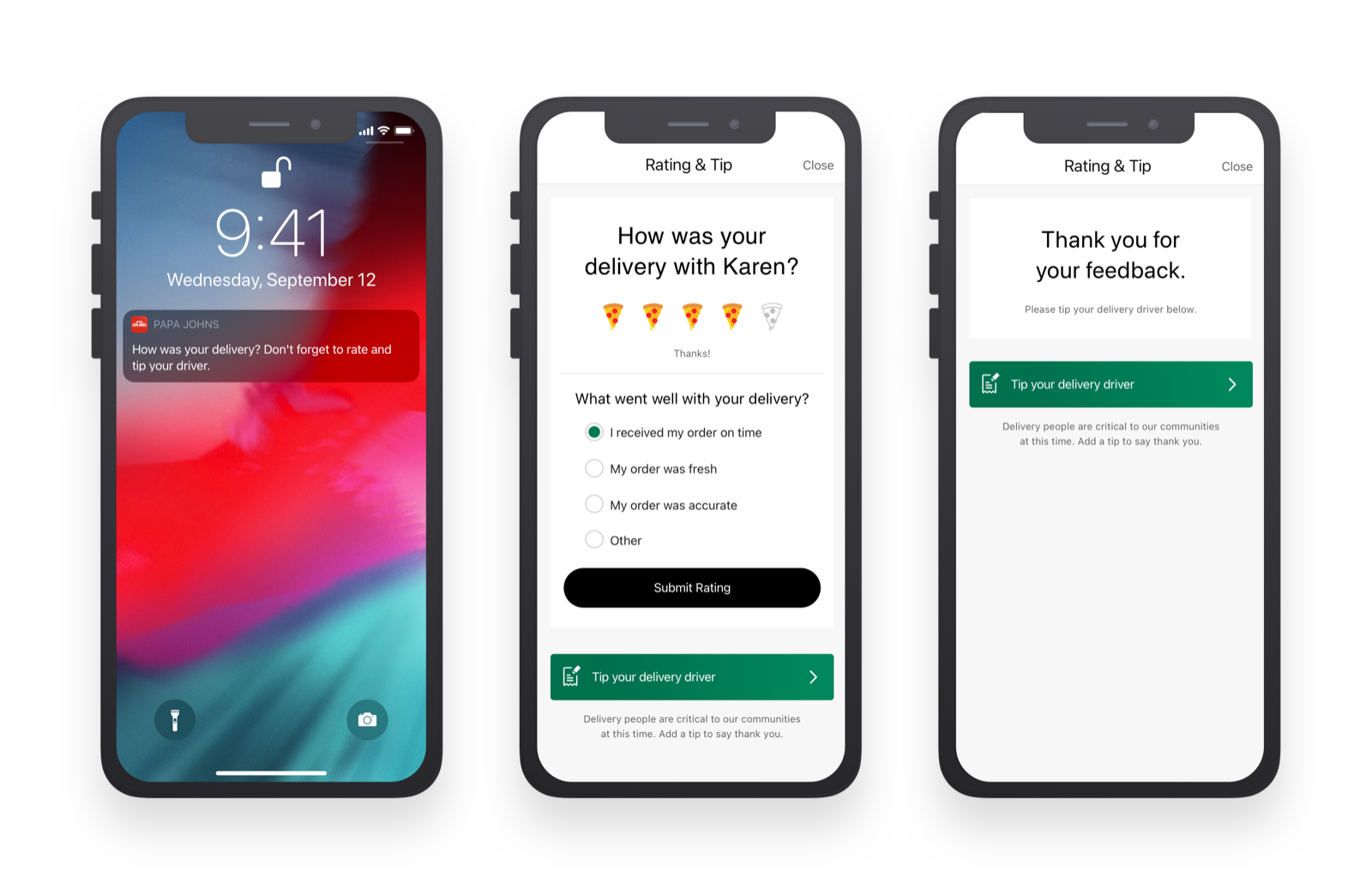
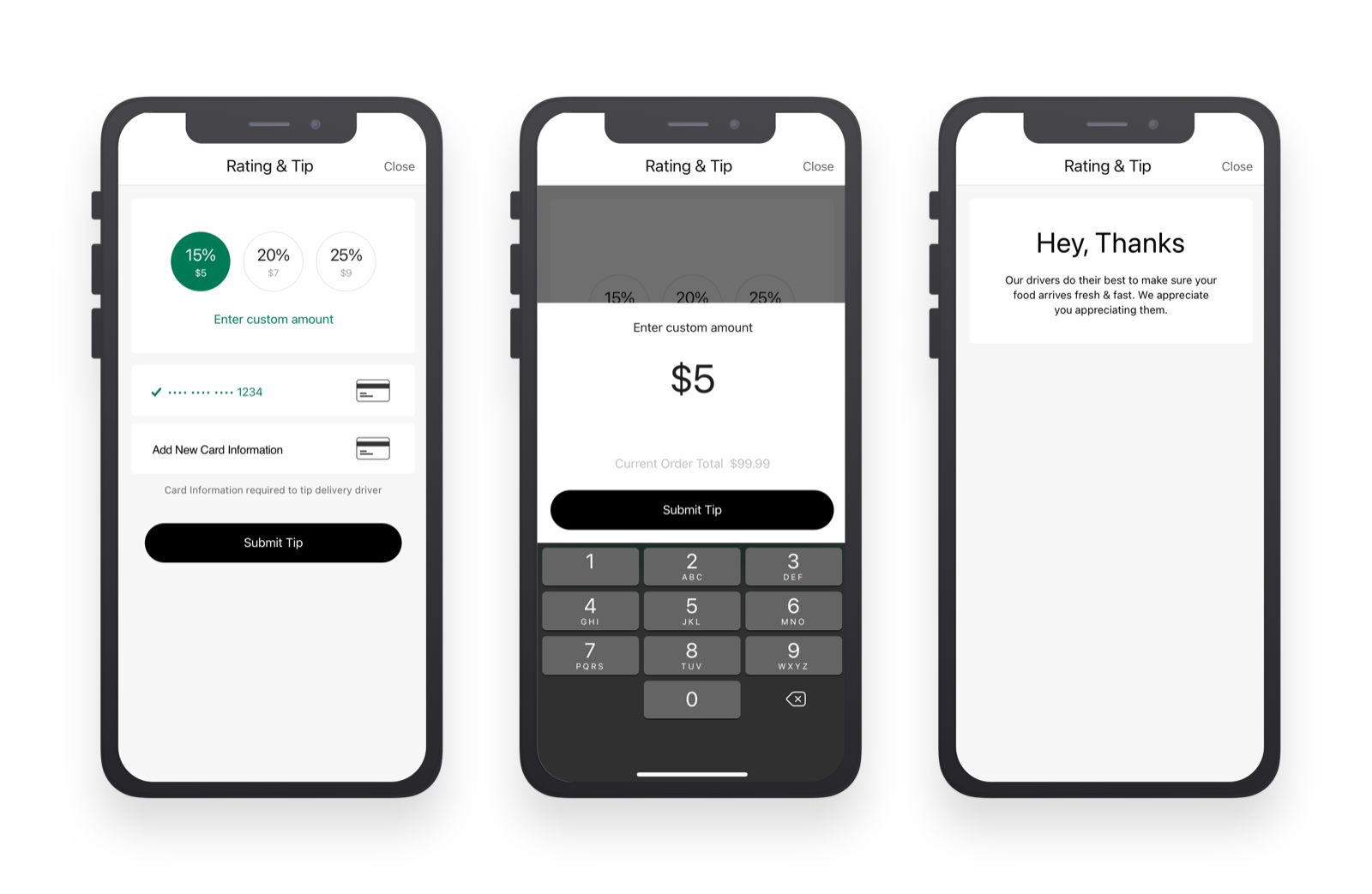
Give drivers standing in the design as a stakeholder in their own right. Post-delivery prompt at the moment the order lands, preset amounts to remove arithmetic, a custom option for control, and stored payment so completing it is one action rather than a checkout.
We added an optional thank-you message. The doorstep exchange had never only been a transaction: it was also the only moment a driver was acknowledged by name. Restoring the money without restoring the acknowledgment would have solved the smaller half.
Study how everyone else failed before designing
Curbside was being rolled out across quick service at speed, and most of it was bad. Customers could not tell where to park, had no dependable way to signal they had arrived, and were handed processes more complicated than the problem they solved.
Catalog the failure modes first and design against them by name. Under time pressure the instinct is to copy whatever competitors shipped; what we copied instead was the list of ways it went wrong, and treated each one as a requirement.
Days, during a period when days were the currency. It is a genuinely hard argument to make when a working competitor screenshot is sitting on the table.
-
Unclear parking
No dedicated spot, or one nobody could find without circling the lot first.
-
No arrival signal
No dependable way to tell the store a customer had actually arrived.
-
Overcomplicated steps
A process more complicated than the problem it was meant to solve.
Design the operation, not the screen
Curbside is not an app feature. It is an app, a parking lot, a store workflow and a staff member walking out with a pizza. The part design controlled was the smallest part of it, and the failure modes we had cataloged nearly all lived outside the screen.
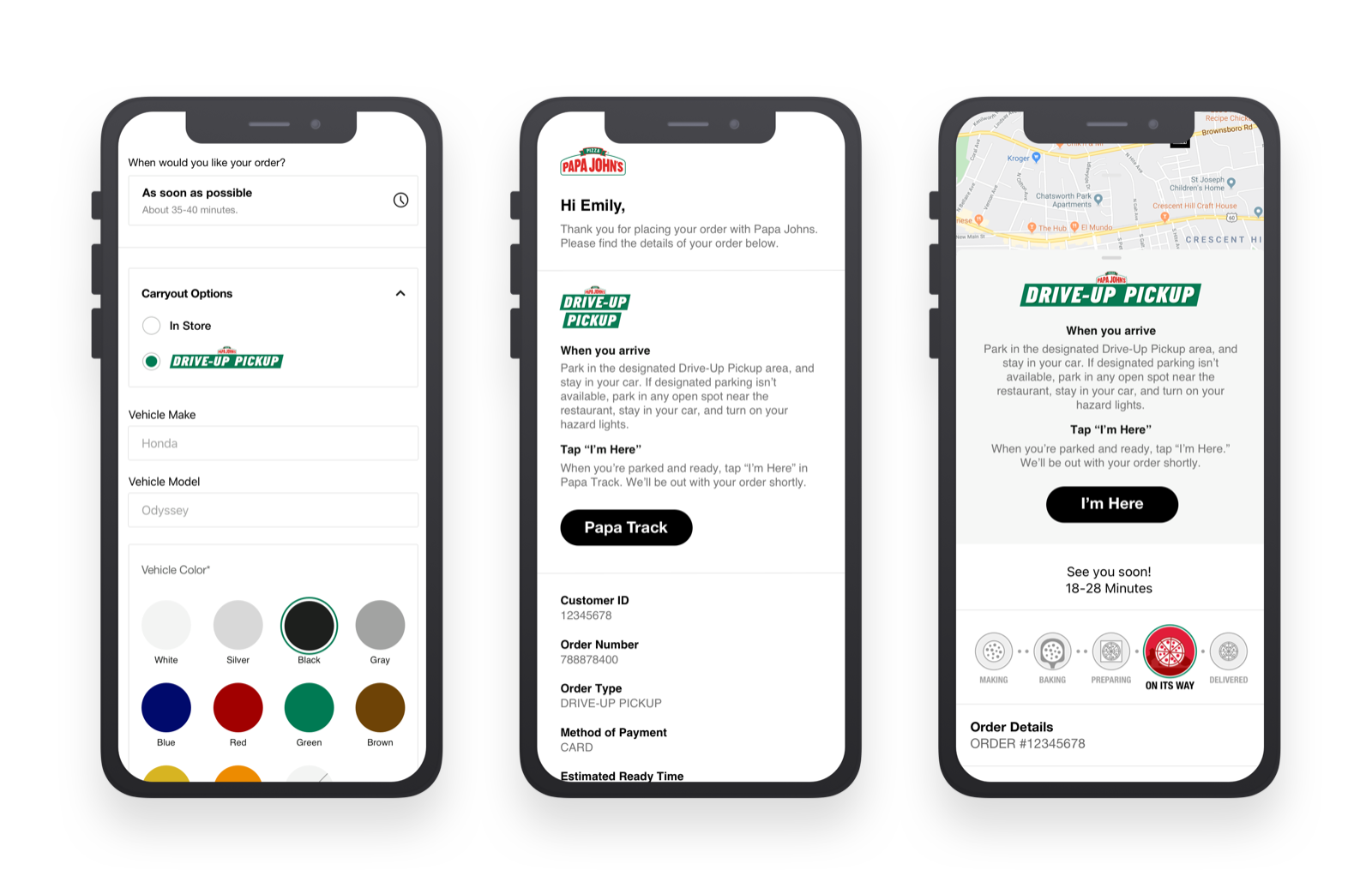
Design across the whole handoff. Car make and model captured at checkout so staff could identify a customer without asking. Designated spots mapped in the confirmation. Arrival signalled by push or phone, with one obvious path rather than several. Real-time order status so nobody sat in a parking space guessing.
Buy-in from store operations, who do not report to design and whose actual shift the change altered. The design was only as good as its adoption behind the counter, which made this a negotiation rather than a specification.
The launch worked, and tips fell
No-Contact Delivery was a success by every measure we had set for it. Drivers could deliver safely, customers felt safer receiving, and the feature was reviewed for customer safety and store safety before it went out.
What nobody had asked was what it did to driver earnings. The doorstep exchange had quietly been doing two jobs: handing over the food, and creating the moment a tip happened. Removing the contact removed the second one, and the people it cost were the only group in the system with no seat at the review.
A launch can succeed and still make someone worse off.Checking who that is became part of how I ship, not a retrospective step.
Where it landed
Both features shipped and held. Tipping rates and per-order amounts rose once the prompt moved to after delivery, and customers described preferring the later moment: being able to judge the service before rewarding it. Curbside removed the circling and the guesswork, and gave the store side enough structure that orders stopped being missed.
-
Tipping
15/20/25%
Preset percentages, matched to the order total
Removes the arithmetic. A custom amount and an optional thank-you note are still one tap away.
-
Prompt
Lock screen
Where the reminder actually lives
Not three taps into the app: a tip only happens if the ask gets seen.
-
Curbside
18–28 min
ETA shown the moment the order is on its way
So nobody sits in the lot without knowing when to expect their food.
How we worked
The reframe from a missing tip control to a missing tipping moment is mine, as is the argument for treating drivers as a stakeholder with standing rather than as a downstream effect. Curbside was built with Product, Engineering and Store Operations; the operational half, which is most of it, was a negotiation with the people whose shift the change actually altered.
Looking back
I would have asked who the change made worse off before shipping it, not after. No-Contact Delivery went through review for customer safety and store safety, and nobody raised driver earnings, including me. The tipping work was good work that should not have been necessary, and the lesson was not about tipping. It was that a stakeholder with no seat at the review is the one who absorbs the cost.